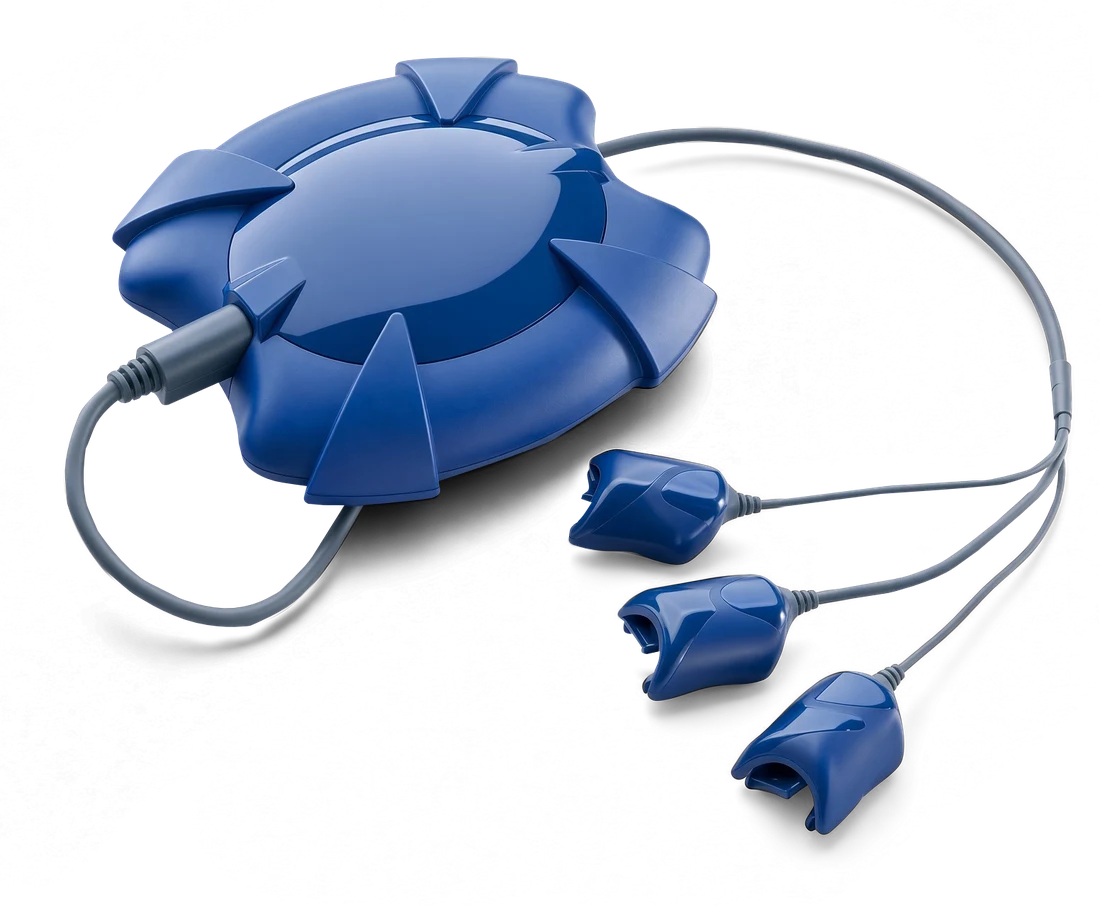
Two nervous-system signals in one small device
Three soft finger sensors: an optical pulse sensor and two skin conductance sensors. Together they show both sides of the nervous system: the heart’s rhythm (recovery and calm) and sweat-driven arousal (stress and activation).
- Pulse waveform at about 30 samples a second: every heartbeat detected and timed for HRV
- Skin conductance in µS: fast, sensitive arousal tracking
- Full HRV: rMSSD, SDNN, pNN50, SD1/SD2, LF/HF, coherence, sample entropy, DFA α1
- Pulse strength: a window on hand warmth and peripheral relaxation
- USB, no drivers: connects from Chrome or Edge on macOS and Windows
- Signal-quality checks built in: finger contact, movement, cold-hands and light-touch warnings
Lightstones are no longer made; used units are widely available. Search for the Wild Divine sensor, model 40101.